
Your roof protects everything inside your home, and damage to this structure isn’t always obvious. Recognizing the early indications that you need roof repair is key. Whether you’re dealing with storm damage, aging materials or gradual wear, understanding these warning signs helps you act before minor issues become major problems.
Why Immediate Roof Repair Matters
Delaying roof repairs rarely saves money. What starts as a small leak or damaged shingle can quickly escalate into rotted decking, compromised insulation, mold growth and interior water damage.
Professional roofers see this pattern repeatedly — homeowners wait too long, and a straightforward repair becomes a costly replacement. Addressing roof damage promptly offers several critical benefits:
- Prevent water intrusion: Even small gaps allow moisture to penetrate beneath shingles, where it can saturate insulation and deteriorate wood structures over time.
- Stop mold and mildew: Trapped moisture creates ideal conditions for mold growth, which spreads through walls and ventilation systems, creating health hazards.
- Maintain energy efficiency: Damaged roofing and compromised insulation force your HVAC system to work harder, driving up heating and cooling costs.
- Protect your home’s value: A well-maintained roof enhances curb appeal and reassures potential buyers, while visible damage reduces property value.
- Support insurance claims: Storm damage documentation becomes more difficult when you can’t prove when the damage occurred or whether neglect contributed to deterioration.
So, should you repair your roof now or wait? The answer depends on the severity and type of damage, but delaying repairs rarely improves the situation.
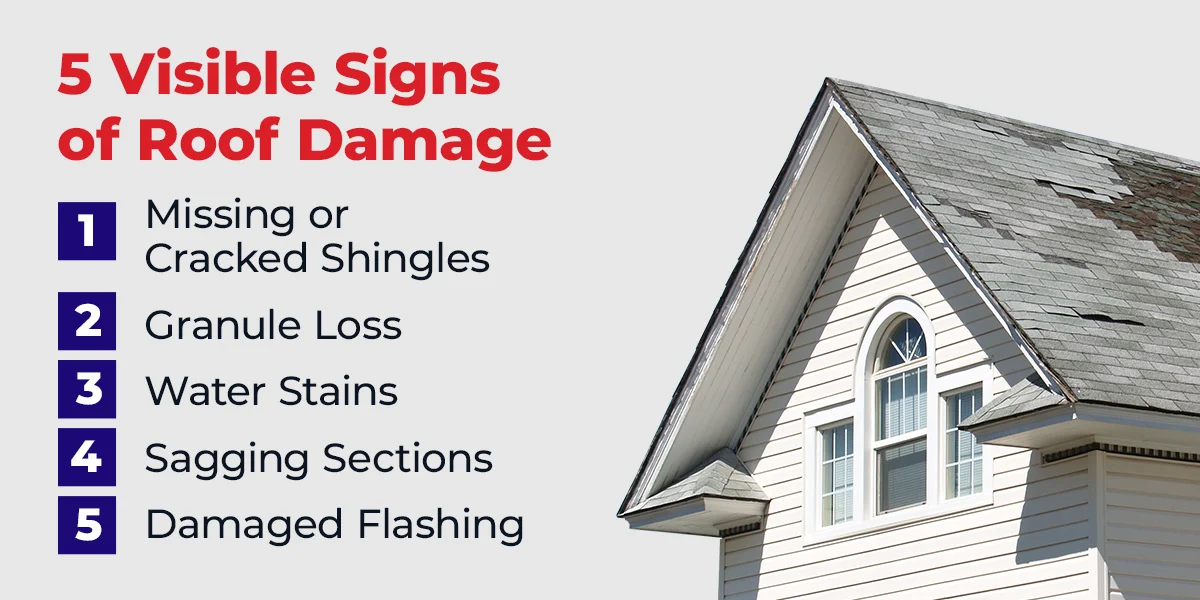
9 Warning Signs of Critical Roof Damage
Understanding whether your roof needs immediate repair starts with knowing what to look for. These warning signs range from obvious exterior damage to subtle interior clues.
1. Missing, Cracked or Curling Shingles
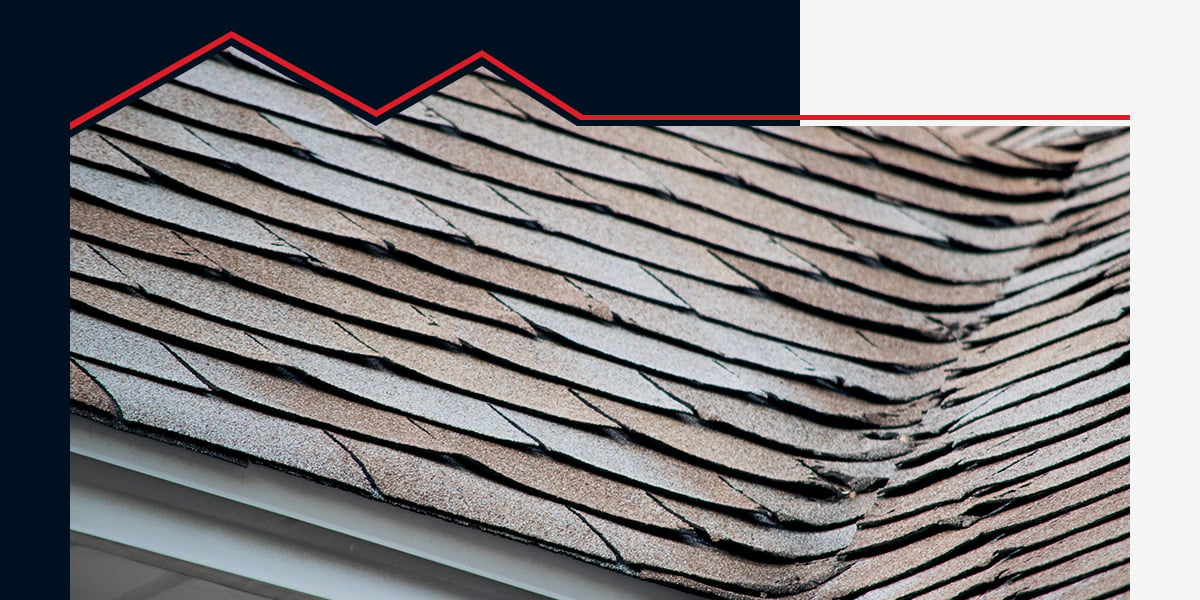
Shingles serve as your roof’s first line of defense against the weather. When you notice shingles that are entirely missing, cracked down the middle, curling at the edges or buckling across the surface, your roof is vulnerable.
Check your roof after severe weather events. If you spot multiple damaged shingles in one area or scattered damage across different sections, schedule a professional roof inspection right away. Even a few damaged shingles can expose the underlayment to moisture and UV damage.
2. Granule Loss and Bald Spots
Asphalt shingles are coated with protective granules that shield them from the sun and the elements. As shingles age and sustain damage, these granules wash away. You might find them collecting in gutters and downspouts or notice bald patches on the shingles themselves.
Significant granule loss indicates your shingles are nearing the end of their lifespan. Without this protective layer, shingles deteriorate rapidly under direct sunlight. If your gutters contain large amounts of granules or you see widespread bald spots, your roof may need replacement rather than simple repairs.
3. Sagging Roof Sections
A sagging roof is a critical warning sign of structural issues like water damage or weakened supports, potentially leading to collapse. Address any sagging immediately with a roofing expert. Do not let this issue go unaddressed.
4. Water Stains on Ceilings and Walls
Interior water stains on ceilings or walls indicate early signs of roof leaks inside your house, even if the source isn’t directly above. Regularly check your attic for stains, streaks or damp insulation, as these can signify hidden water damage.
5. Damaged or Deteriorating Flashing
Flashing consists of thin metal strips installed around roof penetrations like chimneys, vents and skylights. This material creates weathertight seals at vulnerable transition points. When flashing becomes loose, corroded, cracked or separated from surrounding materials, water can easily enter.
Have an expert carefully inspect the flashing during routine maintenance. Look for rust spots, lifted edges, gaps between the flashing and adjacent surfaces or sections that appear bent or damaged. Properly installed and sealed flashing should lie flat and form continuous barriers around all penetrations.
6. Light Through the Roof Boards
If you can see daylight through your roof boards when you’re in the attic, you have gaps that allow water, pests and outside air to enter. These openings might occur around vents, at ridge lines or where materials have separated due to movement or deterioration.
7. Moss, Algae and Mold Growth
Moss, mold and algae indicate a moisture problem. Their long-term effects can be detrimental, leading to damaged shingles, clogged gutters and shortened roof lifespan. The moisture they retain can freeze during colder months, causing additional issues.
8. Increased Energy Bills
Unexplained spikes in heating or cooling costs can indicate roof damage. Compromised insulation or gaps cause conditioned air to escape, forcing your HVAC system to work harder. If other causes are ruled out, poor attic ventilation, damaged insulation and air leaks may be the issue.
9. Clogged or Damaged Gutters
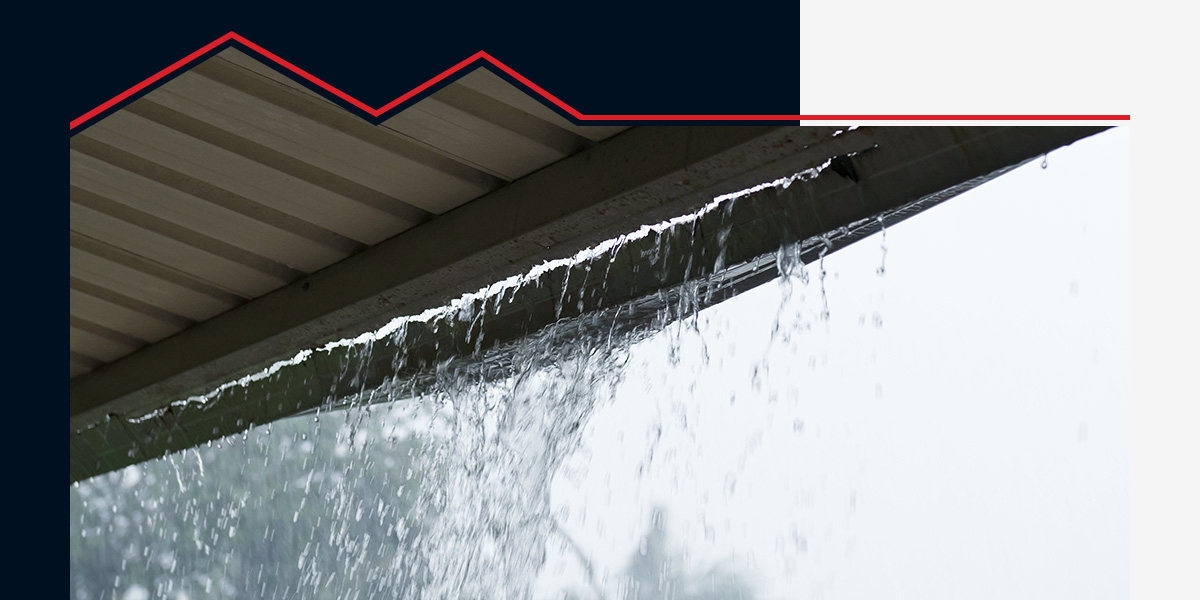
Gutters that overflow regularly, pull away from the roofline, contain granules from shingles, or show signs of rust and deterioration can indicate broader roofing problems. When gutters and downspouts don’t function properly, water backs up under shingles and pools on the roof surface.
Examine your gutters for shingle granules — a sign your roof surface is deteriorating. Also look for water stains on siding beneath gutter lines, ice dams in winter or plant growth in gutter channels. These issues often accompany roof damage and require professional assessment.
How Professional Roof Inspections Help
Professional roofers can see potential issues that homeowners may miss. They will examine every vulnerable area and use their experience to identify early warning signs of roof damage. A thorough inspection includes:
- Exterior assessment: An expert will evaluate shingle condition, flashing integrity, chimney structures, vent pipes and the overall roof condition.
- Interior examination: Professionals check attic spaces for water stains, adequate ventilation, insulation condition and signs of pest intrusion.
- Structural evaluation: Roofing experts will assess proper support and look for signs of stress or movement that could indicate foundation issues.
- Documentation: Photographing damage to support your records and provide clear evidence for insurance claims when applicable.
- Detailed estimates: By providing accurate repair cost assessments, experts help you understand your options and make informed decisions.
Protect Your Home With Timely Roof Repairs
When disaster strikes, you need services to keep your roof secure. If you’ve noticed water stains, damaged shingles, sagging sections or any other warning signs, a professional assessment provides the information you need to protect your home and make informed decisions.
AmeriPro Roofing is a roofing company that’s been in your corner since 2000, specializing in residential roofs, vinyl siding and gutter restoration after storm damage. We repair wind and hail damage quickly and professionally, providing detailed repair estimates to help you understand your options. Additionally, we document storm damage thoroughly to support your insurance claim.
With locations across the United States and GAF Master Elite certification, our experienced team brings proven expertise to every project and helps you navigate the restoration process. Schedule a complimentary inspection or emergency roof repair services today.