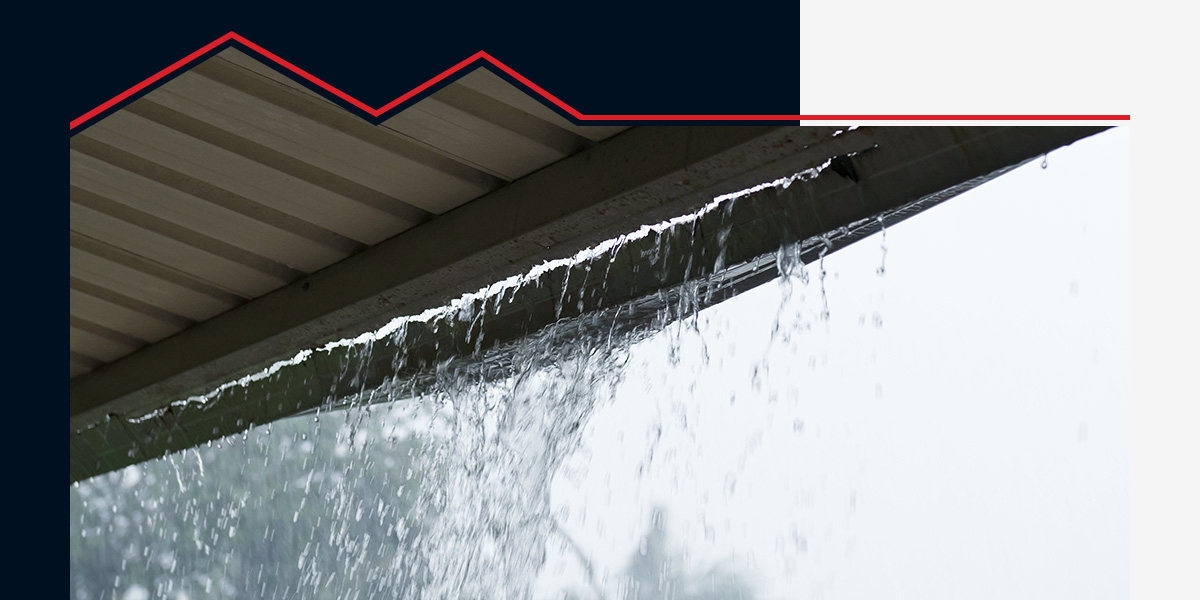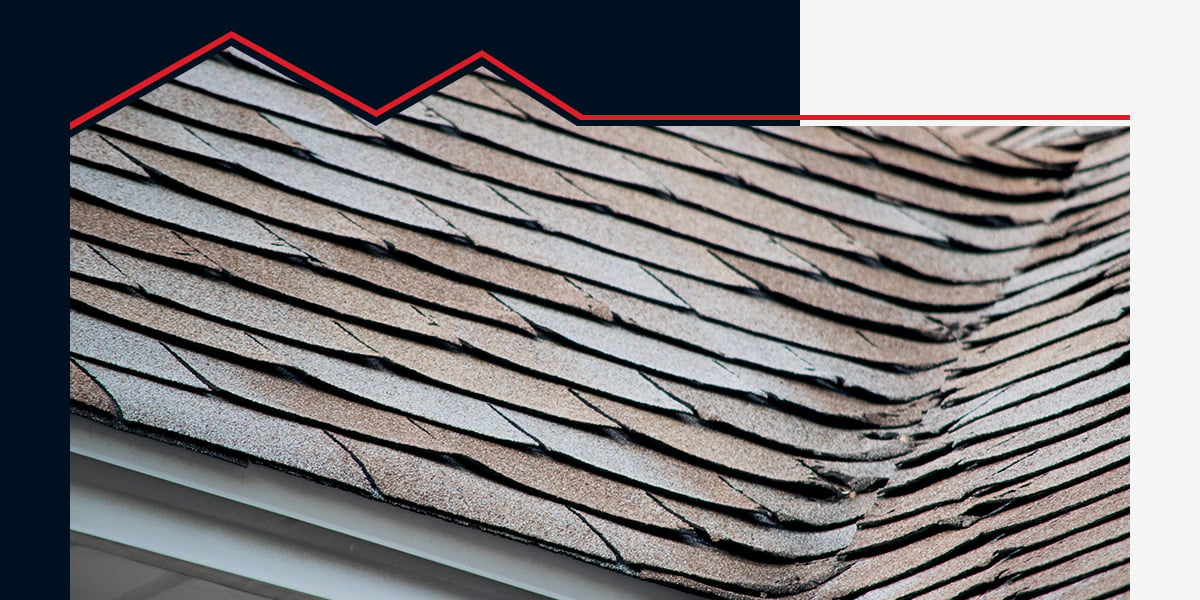
Roofing is not a one-size-fits-all building component. Homes in different locations and climates have varying needs when it comes to roofing construction, weatherproofing and materials. While a roof in Arizona might need to withstand UV degradation and thermal shock, a roof in Minnesota needs to be resistant to ice dams and heavy snow loads.
This guide from AmeriPro Roofing covers everything you need to know about choosing the best roofing materials for different climates. From preventing storm damage to mitigating UV radiation, discover how you can protect your home with the right roofing materials.
The Importance of Choosing the Right Roof for Your Climate
Weather-related damage accounts for the majority of home insurance claims in the U.S., so homeowners must strongly consider their home’s climate when choosing roofing materials and designs. It can be tempting to opt for cheaper solutions, but what they may offer in initial savings, they often counter with long-term costs due to failure and inadequate quality. From premature replacements to weather-related damage and energy inefficiency, improper roofing can cost homeowners thousands of dollars over the years, marking the hidden cost of choosing the wrong material.
It’s important to note that even within broader climates, roofing may need to be adapted to suit different microclimates. For example, while a high-altitude property at the top of a hill may require wind-resistant roofing, a home located in a valley in the same region will likely need to withstand more intense temperature fluctuations.
The Best Roofing Materials for Hot and Dry Climates
Primarily concentrated in the southwest region of the U.S., hot and dry climates challenge the integrity and lifespan of roofs with UV radiation, high temperatures and temperature fluctuations. Without the right materials and design, the conditions in these climates can be detrimental to your home’s roofing.
How Heat Affects Roofs
The most common roofing problems caused by heat and extensive sun exposure include:
- Thermal expansion: Temperature fluctuations can cause many roofing materials to expand and contract. Over time, this cycle can cause materials to warp, blister, crack and become less effective.
- UV damage: Extensive exposure to the sun and its ultraviolet rays can cause many types of roofing materials to crack, fade and deteriorate.
- Energy inefficiency: Roofing materials that are exposed to UV radiation or thermal damage can become less energy-efficient. At the same time, materials that absorb too much heat can transfer heat to the interior of your home. This can decrease your property’s energy efficiency and increase air conditioning and cooling costs.
The right roof materials can help combat UV radiation and heat transfer. Cool roofs help increase solar reflectance (SR) and thermal emittance (TE), enabling roofing to reflect UV rays and release absorbed heat back into the atmosphere more effectively. By deflecting more UV rays and minimizing heat absorption, cool roofs can reduce roof surface temperatures by 50° Fahrenheit or more, and lower cooling energy needs by up to 15%.
Top Material Choices for Heat and UV Resistance
When designing a roof that is best for hot, dry climates, you need to select materials for the roof’s outermost layer that reflect more sunlight and absorb less heat than conventional roofing materials. Generally, white-colored roofing materials are most effective at staying cool in hot conditions, as they can reflect between 60% and 90% of sunlight.
The best roofing materials for heat and UV resistance include:
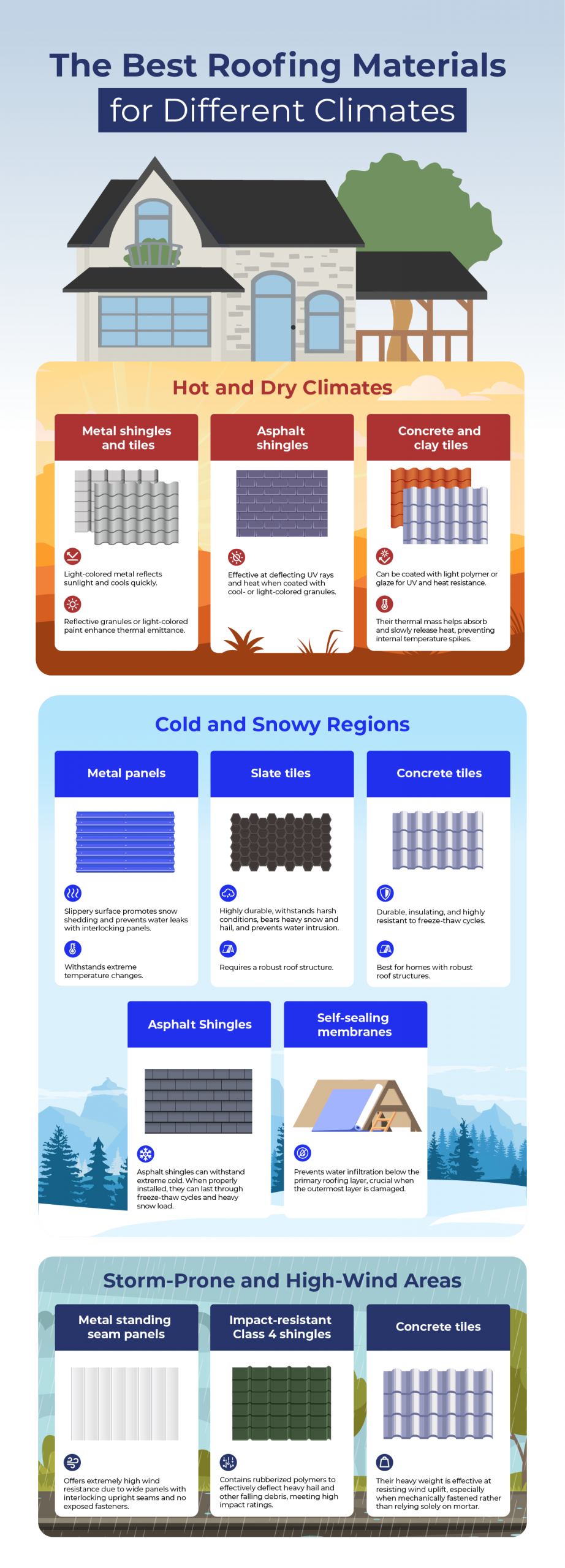
- Metal shingles and tiles: Light-colored metal effectively reflects sunlight and cools quickly at nighttime. Although unpainted metal tends to have poor thermal emittance, metal shingles painted with reflective granules or light-colored paint are more effective at releasing heat back into the atmosphere.
- Asphalt shingles: Commonly made from fiberglass and filled asphalt, overlapping asphalt shingles are particularly effective at deflecting UV rays and heat when coated with cool- or light-colored granules.
- Concrete and clay tiles: Although concrete is typically dark or gray, concrete tiles can be coated with a light-colored polymer to enhance UV and heat resistance. Similarly, clay tiles can be coated in a light glaze. Thanks to their thermal mass, concrete tiles can absorb heat during the day and release it slowly at night, preventing it from spiking the home’s internal temperatures.
The Best Roofing Materials for Cold and Snowy Regions
For homes in the colder regions of the U.S., such as in the northern Plains and Upper Midwest, roofing has to endure snow, ice and low temperatures and minimize water infiltration. When choosing roofing materials for homes in snowy and cold regions, you must consider their weight-bearing capacity, shedding capability and insulation quality.
How Snow and Cold Temperatures Affect Roofs
From the snow and cold temperatures themselves to their by-products, such as melted snow, roofs in these regions are met with countless challenges. The primary issues caused by cold temperatures and snow are:
- Ice dams: In extremely cold conditions, ridges of ice can form at the edge of roofs and prevent water and snow from draining off the roof. These ridges are called ice dams, and they can lead to problems including water damage, mold growth, damaged insulation and gutters and decreased energy efficiency.
- Heavy snow loads: In many climates, snowfall can be so heavy that, when not properly shed, it can cause structural damage and severe leaks.
- Freeze-thaw cycles: In snowy climates, fluctuating temperatures can cause snow loads to repeatedly melt and refreeze, which can cause water to enter cracks and expand. In turn, this can lead to material breakage, such as cracked shingles and broken seals.
Top Roofing Materials to Manage Snow Shedding and Ice Dams
You can mitigate the issues caused by cold temperatures and snowy climates by choosing roofing materials that enhance snow shedding, withstand heavy snow loads and prevent water infiltration.
Material choices that are best for cold, snowy climates include:
- Metal panels: Thanks to their slippery surface, metal panels enhance snow shedding and help it slide off your roof before it melts and refreezes. Interlocking panels are particularly beneficial as they help prevent water from leaking into or through the roofing. Metal roofing is also superior because it can withstand extreme temperatures and rapid temperature changes.
- Slate tiles: Slate is a highly durable natural material that can withstand harsh conditions and, when properly installed, bear heavy loads of snow and hail and prevent water intrusion. However, due to the material’s weight, slate roofing requires durable roofing structures that can withstand its load.
- Concrete tiles: Renowned for their durability, insulating capacity and high resistance to freeze-thaw cycles, concrete tiles are an excellent choice for homes with robust roof structures.
- Asphalt shingles: Traditional asphalt shingles can withstand extreme cold. When properly installed, they can last through freeze-thaw cycles and heavy snow loads, with heavier shingles often more suitable for extreme snow and winds.
- Self-sealing membranes: Below panels, tiles and shingles, roofs in snowy and cold climates can benefit from waterproof membranes, which help prevent water infiltration when damage occurs to the roofing’s outermost layer.
Best Roofing for Storm-Prone and High-Wind Areas
For the stormiest climates in the U.S., which are primarily concentrated in the Great Plains, the Gulf Coast and the southeast — accurately nicknamed Tornado Alley, Hurricane Alley and Dixie Alley, respectively — homes’ roofing need to be able to withstand impact and resist uplift.
Understanding Wind Uplift and Impact Ratings
When choosing roofing materials for homes in these climates, look for those with the following ratings:
- UL 2218 Class 4 impact rating: Otherwise known as the “steel ball” test, roofing materials with a Class 4 impact rating have been tested to withstand a 2-inch-diameter steel ball dropped from a height of 20 feet, multiple times. In these impact tests, the steel ball represents large hail. Class 4 shingles are considered the most resistant roofing materials.
- Wind uplift ratings: Roofing materials with high wind uplift ratings are designed to prevent strong winds from lifting them up and causing damage. The most resistant roofing materials are those that meet High-Velocity Hurricane Zone (HVHZ) requirements, which typically have a Class H (ASTM D7158) rating and can withstand wind speeds of up to 190 mph without lifting.
The Top Material Choices for Hurricane and Storm-Prone Zones
The best roofing materials for homes in storm and hurricane-prone areas include:
- Metal standing seam panels: Metal standing seam roofing consists of wide metal panels with interlocking upright seams that attach the panels to one another. With no exposed fasteners, this roofing benefits from extremely high wind resistance.
- Impact-resistant Class 4 shingles: Class 4 shingles have rubberized polymers to deflect heavy hail and other falling debris.
- Concrete tiles: Thanks to their heavy weight, concrete tiles are highly effective at resisting wind uplift. The most effective storm-resistant concrete roofing is mechanically fastened to the property and not held by mortar alone.
The Importance of Installation
In extreme storms and hurricanes, roofing structures are vulnerable to unique challenges, and choosing the correct materials is just half of the battle. Along with selecting the most durable roof materials, you must also ensure that these materials are installed specifically to withstand storms and wind.
Elements of secure installation include:
- Interlocking tiles: During extreme storms or hurricanes, rain can fall horizontally, creating a major challenge for traditional overlapping shingles.
- Special fastening: Although standard four-nail patterns might suffice in calmer climates, roofing tiles in storm-prone areas should be more securely fastened. For example, a six-nail hurricane pattern can increase asphalt shingle wind resistance to 130+ mph.
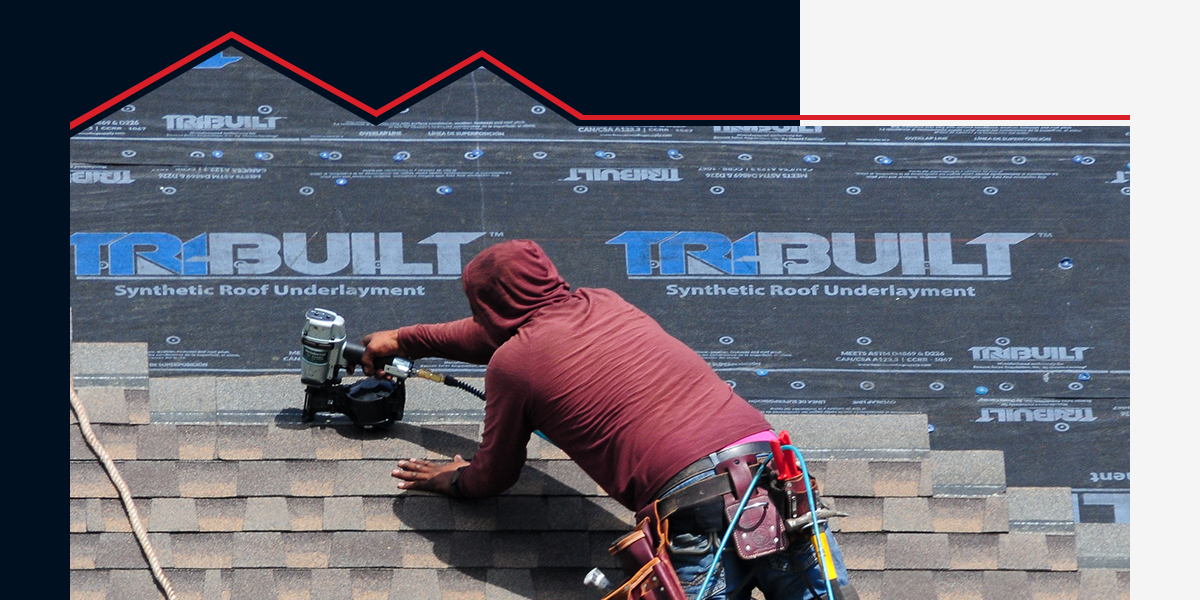
- Secondary water resistance (SWR): Many roofs in storm-prone zones require an additional layer of protection from water. SWR materials are applied directly to roofs, below tiles or panels, to prevent water intrusion in the case of storm damage.
Best Roofing for Variable Climates
While many areas experience only one climate extreme, others encounter a mix of weather conditions. For example, locations such as the Midwest experience intense heat in the summer and below-freezing temperatures in the colder months.
For mixed climates, homes need hybrid roofing that can handle an array of weather challenges, offering flexibility to resist both cold conditions and high UV levels.
The Top Roofing Materials for Changeable Weather
The best types of roofing for homes in variable climates include:
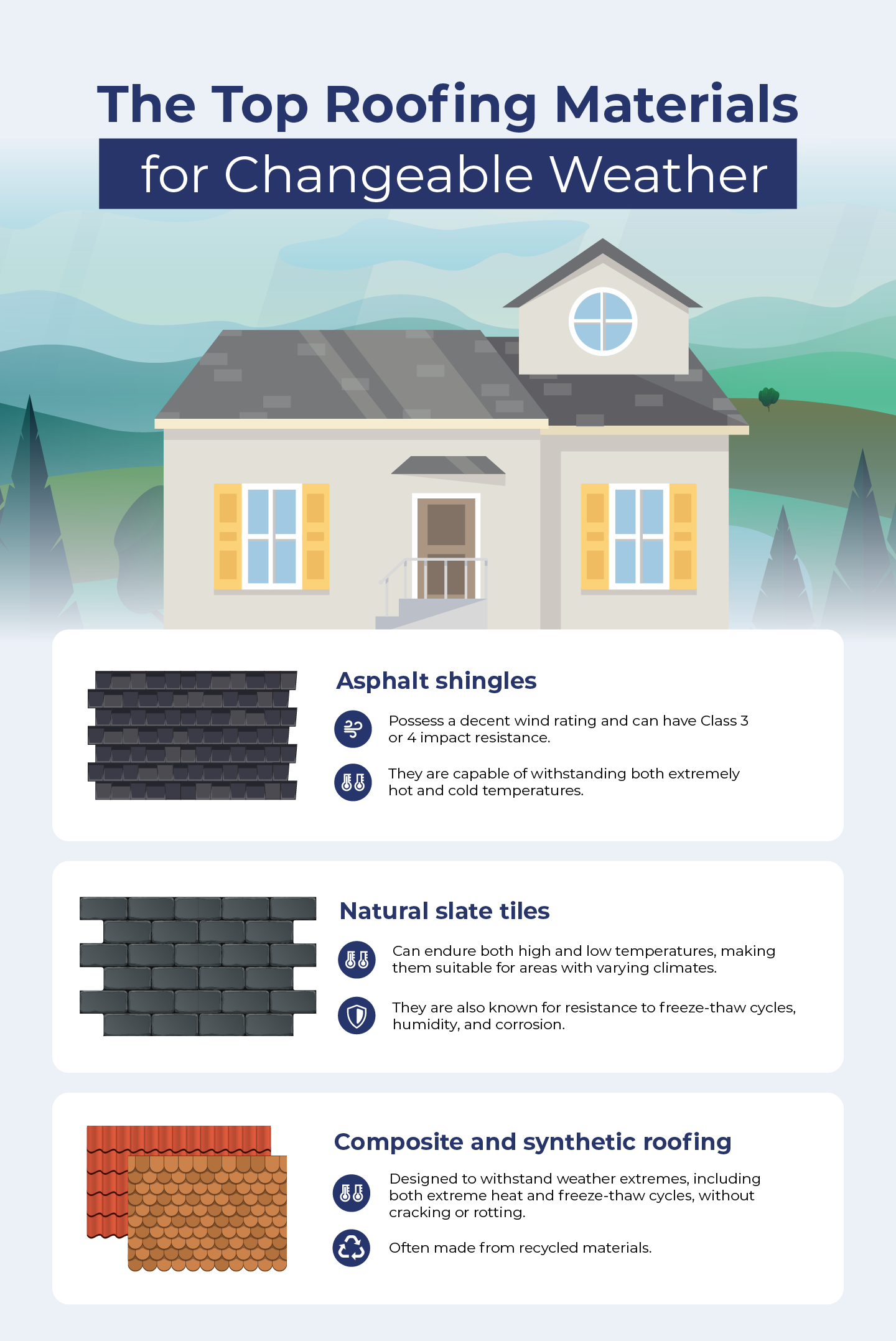
- Asphalt shingles: One of the most common choices for homes facing fluctuating weather, asphalt shingles have a decent wind rating, a choice of Class 3 or Class 4 impact resistance, and can withstand both extremely hot and cold temperatures. Visually, high-end asphalt shingles can mimic cedar or slate at a fraction of the cost. For these reasons, asphalt is often considered the best overall roof shingle for fluctuating weather conditions and climates.
- Natural slate tiles: Slate roofing can withstand both high and low temperatures, making it ideal for homes in areas that experience both. Slate is also renowned for its resistance to freeze-thaw cycles, humidity and corrosion.
- Composite and synthetic roofing: Artificial shingles are designed to resemble cedar shakes or slate tiles, but are generally made from recycled rubber, slate or plastic and have a higher capacity to withstand weather extremes. Engineered from polymers, composite and synthetic roofing is growing in popularity and can handle both extreme heat and freeze-thaw cycles without cracking or rotting.
Matching Durability With Efficiency
There are many different types of roofing materials, designed to suit a variety of climates and weather conditions. While roofing in hot climates with extreme UV radiation can benefit from materials with high reflectivity, roofs in cold areas must support efficient snow shedding. Those in storm-prone climates need to resist wind uplift and high impact from hail and debris.
Generally, roofing materials that are cheapest initially are not the right choice if you want them to withstand challenging conditions. By choosing the right materials that combat your climate’s specific weather battles, you invest in the longevity of your entire home and avoid numerous hidden long-term costs.
From assessing materials’ impact and uplift ratings to complementing them with additional layers of protection, such as water-resistant membranes, as well as prioritizing high-level installation, there are many ways to protect your home from the various challenges posed by Mother Nature.