
There’s never a good time to find a leak in your roof, but it may feel like it always comes at the worst possible time. It can also lead to additional problems that cause further damage to your property if not addressed immediately.
Knowing what to do immediately after finding a leak can dictate how the rest of the situation goes. Read AmeriPro Roofing’s guide to make your roof leak problem less stressful while prioritizing safety and long-term solutions.
What to Do When Your Roof Starts Leaking
Every second matters when you notice a leaking roof, and how you react to the situation makes all the difference. It’s easy for people to lose sight of being calm and rational in these moments. However, having a fast and sensible plan in place is key to being safe while you resolve the issue.
If your roof starts leaking, follow these simple but effective steps immediately:
- Call a professional roofing company and notify them of the leak.
- Let any other people in the house know about the leak.
- Make sure no one else gets near the area of the leak.
- Try to spot any immediate safety concerns.
- Gather towels and buckets.
Then, implement the steps below to ensure you’ve covered all ground.
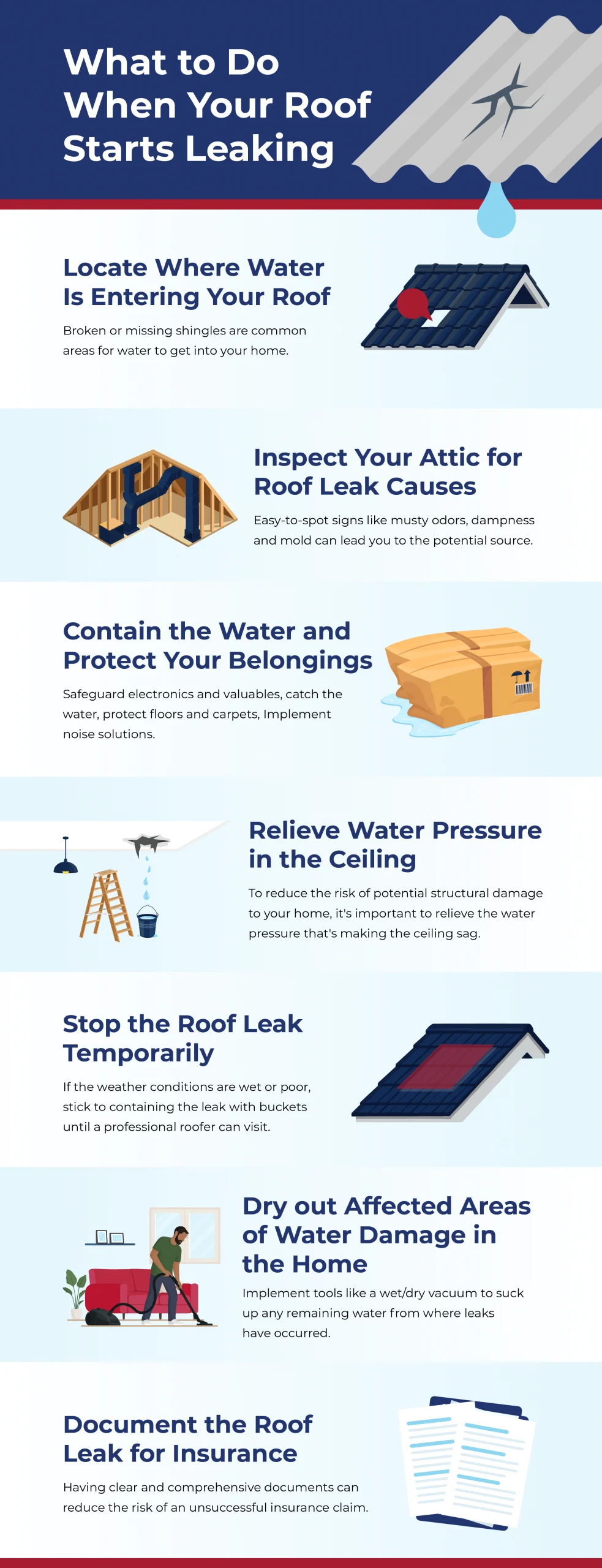
1. Locate Where Water Is Entering Your Roof
Household leaks can be a challenge to find. It’s one of the main reasons why households can waste almost 1 trillion gallons of water per year. Some of the regular problem areas stem from things like damaged roof flashing, vents or broken shingles.
For roof leak detection, it’s important to be aware of these pain points, as water often enters through them. Broken or missing shingles are common areas for water to get into your home. Discolored spots on ceilings or high up on walls can also signal where water is entering.
2. Inspect Your Attic for Roof Leak Causes
Checking your attic is an important part of any roof leak detection protocol. Easy-to-spot signs like musty odors, dampness and mold can lead you to the potential source. Safety should always be a priority, so if you cannot safely check your attic, leave this to the professionals so you don’t risk harming yourself.
Documenting vital information, like the date and areas of damage, can be helpful later for insurance purposes. Filming any leaks or suspect areas on your phone can also speed up the process, as these can be sent to your chosen professional roofer. Taking these steps can expedite the repair process, as the roofer will have a better idea of the situation before arriving.
3. Contain the Water and Protect Your Belongings
Once you’re fairly certain where your roof leak is, there are some simple and immediate actions you can take to help reduce any potential damage. However, it’s essential to only do these if it’s safe and poses no potential harm to you or your loved ones.
The below steps are useful when you need an immediate plan to protect your belongings from water damage:
- Safeguard electronics and valuables: Turn off any electricity that’s likely to be affected by your roof leak. Electrical hazards can lead to fire, injury and even death. In other words, if you’re not sure, be cautious and switch it off anyway. When that’s been safely done, move any furniture, electronics or home valuables away from the leak area.
- Catch the water: Place plastic sheeting or a sturdy tarp over the suspected leak area to reduce further water damage. Also, consider putting down buckets or large pots to catch any water while you wait for a professional to arrive.
- Protect floors and carpets: If the leak appears persistent and heavy, be sure to cover and protect your flooring and carpets with some towels. This not only protects them from spoiling or warping, but also prevents any slips and falls.
- Implement noise solutions: Placing a kitchen towel or a sponge in your pots and pans can reduce the dripping noises they make when catching leaks. Putting a few small drops of dishwasher liquid in there will have the same effect, as it helps reduce the sound of landing water into a pan.
While these steps can be helpful for protecting your belongings from water damage, keep in mind that they aren’t long-term solutions. Once a professional arrives, they can help you properly resolve the problem and find a long-term, lasting solution.
4. Relieve Water Pressure in the Ceiling
Some roof leaks may already be pretty extensive by the time you find them. In some cases, this can mean encountering a sagging ceiling that needs an immediate response. To reduce the risk of this issue causing serious potential structural damage to your home, it’s important to relieve the water pressure that’s making the ceiling sag. This can be done by creating a small hole, which helps drain the water out safely.
Following these basic steps can relieve water pressure slowly and securely while you wait for a professional to take over. However, these steps should only be followed if it’s safe to do so and poses no risk to anyone:
- Step 1: Ensure any electrical outlets or electric supplies are still turned off and haven’t been switched back on.
- Step 2: Place a large bucket underneath the sagging area to catch the water.
- Step 3: Find a secure ladder or chair to stand on to be closer to the area.
- Step 4: Gently poke the center of the bulging area of the ceiling with a screwdriver.
Remember that a ceiling with water damage will need repairs anyway, so it’s not the end of the world if the hole grows larger as the water comes out. The main area of concern will always be the safety and health of you and your loved ones.
5. Stop the Roof Leak Temporarily
Roof leak prevention should ideally involve a qualified professional roofer. However, there are times where you may need to know how to stop a roof leak temporarily while you wait for someone to come and do a permanent fix. The tips below can help provide some temporary relief in the meantime:
- Clean the area: Start by removing any debris, like dust, leaves or twigs. If there’s any moss or algae around the wet areas, apply a little water with an equal mix of white vinegar to them and leave for 30 minutes. Scrub the area gently with a soft-bristled brush and rinse off with regular water, being careful not to lift any roof shingles. Then, pat dry with a clean rag or dry towel to help your sealant attach.
- Seal the area: Waterproof tape is a popular choice for shingles and flat roofs. Apply slowly and press down on the tape as you go, aiming for 4-5 inches of overlap at each end. Roofing cement or spray-on coatings are also popular choices for creating strong seams. For roofing cement, use a trowel to pack the leak area and spread beyond the damage area by 2 inches. Most spray-on options dry within a few hours and will be fully cured within 24-48 hours.
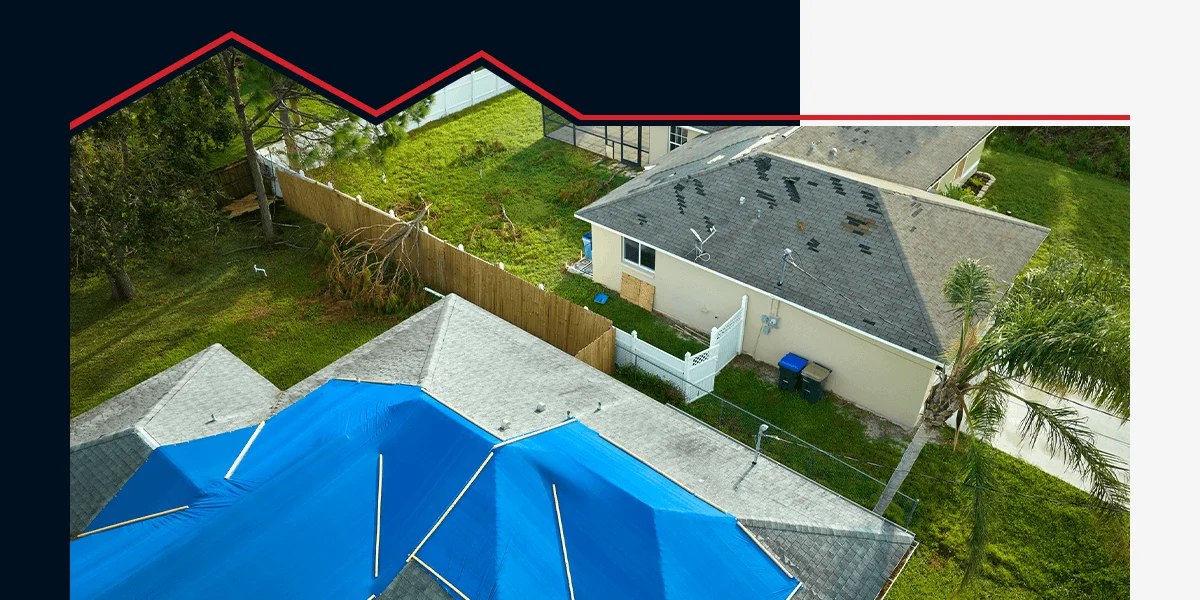
- Secure your tarp: A tarp should be applied externally to reduce the risk of further leaking. Aim for a durable, waterproof tarp that extends at least 3 feet beyond the leak area to divert any water flow. Secure your tarp further by adding weights like sandbags, bricks or concrete blocks to stop wind damage. Aim to strategically place each weight at a corner to add stability, checking their positioning daily.
It’s important to remember that these tips are not long-term solutions. They should also only be done if completely safe. If the weather conditions are wet or poor, stick to containing the leak with buckets until a professional roofer can visit.
6. Dry out Affected Areas of Water Damage in the Home
With the exterior of the roof now more secure, it’s important to dry out any affected areas in your house. Failing to properly dry out affected areas after a roof leak is one of the most common roofing problems people encounter.
Implement tools like a wet/dry vacuum to suck up any remaining water from where leaks have occurred. You should also try to dry out any wet furniture items outdoors to help reduce the amount of moisture in the area. Keeping windows open regularly and creating strong airflow with fans will also help that moisture evaporate. If the weather is too uncertain for open windows, increase the temperature in your home to dry everything faster.
7. Document the Roof Leak for Insurance
Having clear and comprehensive documents can reduce the risk of an unsuccessful insurance claim. Not only does it help show the impact of the leak on your home and possessions, but it can also help you identify patterns that contribute to a faster resolution.
Having a simple checklist of actions can help reduce issues or confusion later on. Follow these steps when documenting roof leaks for insurance:
- Log the date and time of the leak discovery.
- Note how severe the leak is, especially if it’s not isolated to one specific area of the roof.
- Include photos and videos of any interior or exterior damage to your house.
- List all damaged items, including stains, paint peeling, furniture and electrical goods.
- Keep a log of the estimated value of these damaged items.
- Keep any receipts for temporary repairs made.
When you’re collecting documents and information for a possible insurance claim, following the rule of “if in doubt, keep a record of it anyway” is always a good idea.
What Damage Can a Roof Leak Cause?
A roof leak can seem like a minor problem to the untrained eye, but it needs to be fixed as soon as possible to prevent this problem from escalating further. Once it’s there, a leak can damage your property in numerous ways if left unaddressed.
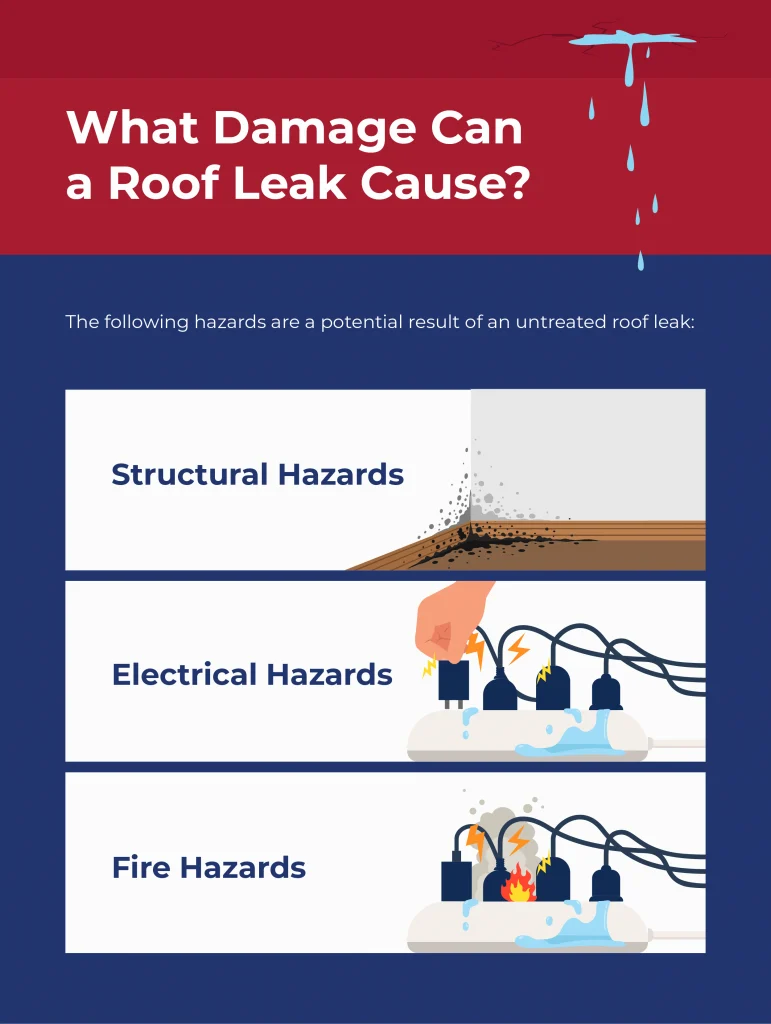
The following hazards are a potential result of an untreated roof leak:
- Structural hazards: Immediate roof leak prevention and repairs are essential to reduce the risks of structural damage in your home. These hazards can range from wood rot in beams and rafters to support beam metal corrosion and sagging ceilings. This can lead to severe structural instability and potential danger to anyone living there.
- Electrical hazards: Homes are designed to handle high voltages. Even the slightest amount of water on an electrical panel could trip a circuit breaker or cause electrical damage, or even electric shocks to anyone within the vicinity.
- Fire hazards: These electric issues can also lead to sparks and even full-scale fires, which can quickly escalate and cause potentially irreparable damage to your home.
According to estimates from the National Fire Protection Association (NFPA), a home structure fire is reported every 96 seconds. Understanding the reality of the damage a roof leak can cause will make a huge difference to the safety of yourself and others.
The Importance of Calling a Professional Roofer
A roof leak causes many potential concerns. But knowing when to call a professional roofer can make the difference between a simple fix and potential long-term damage to your home. As soon as a roof leak has been spotted, the next step should be to get in touch with a professional roof repair company.
There may be instances where you need to put a few temporary measures in place to stop a leak. But this should be a short-term solution while you wait for a professional. A leaking roof can lead to significant water damage to a property if not dealt with quickly.
While you may have located a potential entry point for your roof leak, the interior source of a leak isn’t always directly below its external entry point. Having assistance from a professional roofer helps ensure that:
- Your roof leak is properly diagnosed and dealt with.
- The appropriate roof repairs can be performed immediately.
- Any roof leak causes are noted, helping prevent recurring issues.
- The right safety practices and equipment are being adhered to and used.
- Your home can be protected from further damage.
A professional roofer doesn’t just help prevent cosmetic home damage — their services can help prevent potentially severe health concerns. Solving roof leak issues immediately reduces the risk of mold in your house and the associated health risks.
Small Steps and Sensible, Safe Solutions
As soon as you spot a roof leak, acting quickly using these preventive measures makes all the difference in its resolution. By implementing these practices efficiently and working with a qualified professional roofer, you can be better prepared. Should a severe leak occur, you’ll know that you have the necessary precautions to stay safe while ensuring your home is prepared for a more permanent solution.
With a combination of small but cautious steps, your professional roofer can arrive at your home with the right information needed to provide immediate assistance.